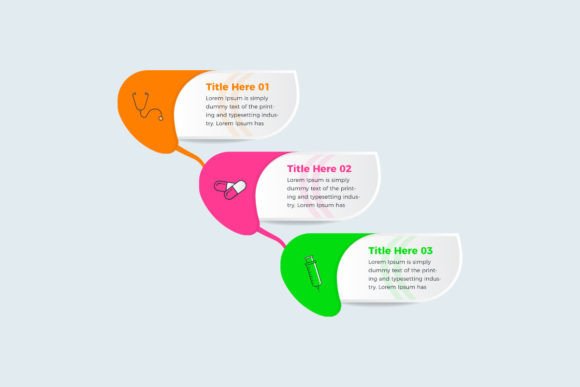
Medical Graphics: Infographics Template Review
When evaluating a new graphic design asset for a healthcare client, my primary concern is always the balance between clinical accuracy and visual accessibility. Recently, while developing a comprehensive patient education campaign for a boutique telehealth startup, I tested the Medical or Medicine Infographic Template to see if it could withstand the rigors of professional commercial design. The first impression was promising; unlike many sterile, overly technical medical vectors, this asset presents a modern, approachable aesthetic that feels appropriate for today’s consumer-facing health brands. The mood is clean yet empathetic, avoiding the coldness often associated with hospital signage while maintaining enough structural integrity to convey trust. For a designer tasked with translating complex medical data into digestible content, this template offers a sophisticated starting point that bridges the gap between scientific authority and user-friendly communication.
Evaluating Vector Integrity for Brand Identity Systems
In my recent project, the client required a cohesive visual language that would span from their mobile app interface to printed brochures. A critical factor in selecting this Medical or Medicine Infographic Template was the inclusion of fully editable vector files. Having access to the Illustrator CC file and EPS 10 format is non-negotiable for serious brand identity work. During my review, I opened the source files to inspect the path structure. Clean geometry is essential; messy anchor points or excessive gradients can cause rendering issues when scaling down for app icons or up for large-format posters. This asset performed well under scrutiny. The healthcare icons were constructed with logical grouping, making it easy to isolate specific elements for custom logo design variations or standalone UI components without breaking the overall composition.
For designers working on small business branding, this level of editability allows for genuine customization rather than mere recoloring. I was able to adjust stroke weights to match the client’s existing typography and modify icon metaphors to better reflect their specific niche in preventative care. This flexibility transforms a generic template into a bespoke creative design solution. However, users should note that while the SVG and EPS files are robust, they require intermediate-to-advanced vector skills to modify effectively. If you are a marketer or blogger relying solely on drag-and-drop tools, you may find the learning curve steep compared to a native Canva template, though the payoff in unique brand ownership is significantly higher.
Performance Across Digital and Print Touchpoints
A versatile design bundle must perform consistently across mediums. I tested this Medical or Medicine Infographic Template in three distinct scenarios relevant to modern marketing campaigns. First, as a hero graphic for a landing page, the horizontal layout provided excellent negative space for overlaying headline copy without obscuring key visual information. The modern design style translated beautifully to screen, with crisp lines that remained sharp on high-DPI displays. Second, for social media graphics, specifically Instagram carousels and Pinterest pins, the modular nature of the three options allowed me to break the infographic into individual slides. This adaptability is crucial for content creators who need to maximize the ROI of a single digital product.
Third, and perhaps most challenging, was the print application. We utilized the template for a tri-fold brochure intended for clinic waiting rooms. Here, the CMYK color separation in the provided files proved accurate, with no unexpected color shifts during the proofing stage. For those involved in print-on-demand or creating physical collateral like flyers and posters, this reliability saves time and prevents costly reprint errors. The PNG files included in the package also serve as excellent fallbacks for quick mockups or internal presentations, featuring transparent backgrounds that integrate seamlessly into various layouts. Whether you are designing editorial design spreads for a health magazine or web design elements for a medical blog, the asset maintains its legibility and professional tone.
Strategic Placement and Visual Hierarchy Considerations
While the Medical or Medicine Infographic Template is highly capable, it is not a universal fix for every layout challenge. Through testing, I identified specific environments where this asset excels and others where caution is warranted. It performs best in large layout areas where the intricate details of the healthcare icons have room to breathe. As a central focal point in marketing visuals or as a structured guide in packaging design for supplement bottles, it establishes immediate context and guides the viewer’s eye logically through the information. The visual hierarchy is built into the template’s architecture, helping to organize dense medical data into a narrative flow that reduces cognitive load for the patient or consumer.
Conversely, designers should be careful when deploying this asset in small sizes or crowded compositions. The detail density that makes it look premium at full scale can become visual noise when reduced to a thumbnail or a footer element. In minimalist branding projects that rely heavily on whitespace, the template may feel too illustrative or busy unless significantly simplified. I also advise against using it on complex photographic backgrounds without a solid container or overlay; the interplay between the vector lines and photo texture can compromise readability. For Cricut project users or those creating vinyl decals, the intricacy of some icons may require weeding adjustments or simplification to ensure clean cuts. Always assess the contrast ratio against your background color to maintain WCAG accessibility standards, especially for medical content where clarity is a safety issue.
Technical Due Diligence for Commercial Application
Before integrating any clipart or illustration into a paid client project, rigorous technical validation is mandatory. My review process for this Medical or Medicine Infographic Template included several stress tests that I recommend to all professional users. First, convert the entire design to grayscale. If the hierarchy collapses and elements blend together without color differentiation, the design relies too heavily on hue rather than value, which will fail in black-and-white printing or for visually impaired audiences. This template passed the grayscale test reasonably well, though I had to adjust the opacity of secondary elements to improve distinction.
Next, verify the licensing terms explicitly. While the asset is marketed for commercial use, always confirm whether attribution is required or if there are caps on unit sales for Etsy product listings or sublimation design merchandise. For t-shirt design or apparel, test the vector output on fabric; fine lines that look great on screen may not hold up on textured cotton. Compare the template’s line weight against your chosen typeface. I found it paired exceptionally well with geometric sans-serif fonts like Montserrat or Open Sans, reinforcing the modern medical aesthetic. Script or handwritten fonts created a dissonance that felt unprofessional for this specific category. Finally, check the transparency of the PNG files. Some assets claim transparency but retain white bounding boxes; this package delivered true alpha channels, streamlining the workflow for sticker design and digital compositing.
Final Assessment for Professional Design Workflows
The Medical or Medicine Infographic Template stands out as a robust tool for designers who need to elevate healthcare communications beyond generic stock imagery. Its strength lies in its structured versatility and clean vector construction, making it suitable for everything from product mockup presentations to detailed patient guides. For handmade business owners in the wellness space or agencies handling multiple health clients, this asset provides a consistent foundation that accelerates production without sacrificing quality. It supports visual trust and audience engagement by presenting medical information in a format that feels both authoritative and human-centric.
However, success with this asset depends on intentional application. It is not a plug-and-play solution for low-effort content but rather a professional-grade component that rewards thoughtful adaptation. By respecting its spatial requirements, validating its technical specs, and aligning it with appropriate typographic partners, designers can leverage this template to create polished, effective design assets that resonate with modern healthcare audiences. Whether you are building a creative marketplace portfolio or delivering a high-stakes rebrand for a medical practice, this template offers the structural reliability and aesthetic refinement necessary for real-world commercial success. Just remember to always prioritize legibility and accessibility over decoration, ensuring that the final design serves the patient’s understanding above all else.