Types of Diversity Infographic Templates Review
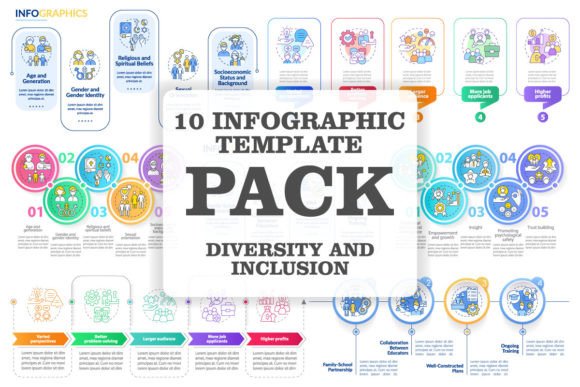
As an embroidery designer who constantly bridges the gap between digital graphics and tangible stitched goods, I approach every new asset with a specific question: will this actually translate to thread? When evaluating the Types of Diversity Infographic Templates, my perspective shifts from pure graphic design to practical manufacturing. This set, featuring twelve editable templates focused on difference, equality, and data visualization, offers a unique challenge for makers. While originally intended as digital infographics, the clean line icons and workflow layouts present intriguing possibilities for custom apparel and educational merchandise, provided we understand the translation from screen to stabilizer.
Translating Data Visualization Into Stitch
The first impression of these templates is one of structured clarity. The visual personality is professional yet inclusive, relying heavily on line icons and step-based timelines rather than dense photographic elements. For an embroidery project, this is generally a positive attribute. Complex gradients often fail in machine embroidery design, but vector-style lines and distinct shapes are the native language of our craft. The mood created by these graphics is modern and purposeful, making them ideal for organizations, non-profits, or educational brands looking to create meaningful handmade products.
However, "infographic" implies text and small details. As I reviewed the workflow layout with line icons, I immediately began mentally simplifying the compositions. A digital timeline that looks crisp at 100% zoom on a monitor may become a muddy mess when reduced to fit a standard hoop size. The strength of this collection lies in its modularity. Because the zip file contains 12 separate infographic templates, you have the flexibility to isolate specific icons or steps rather than forcing a dense chart onto fabric. This selectivity is crucial for maintaining stitch clarity and ensuring the final embroidered patch or garment remains legible and aesthetically pleasing.
Real-World Application: The Community Tote Bag
To truly test the viability of these assets, I envisioned a real-life scenario: creating a series of canvas tote bags for a local community center’s diversity workshop. The goal was to produce a functional, personalized gift that also served as an educational tool. I selected a template featuring a circular workflow of unity concepts. In a digital format, this might include six distinct icons with connecting arrows and explanatory text.
For the sweatshirt embroidery or tote bag design adaptation, I had to make executive decisions. I stripped away the micro-text and focused solely on the central line icons and the connecting flow. Using a running stitch for the connectors and a light fill stitch for the icon backgrounds, the design transformed from a data chart into a symbolic emblem. The result was a clean, minimalist graphic that communicated the theme of equality without overwhelming the fabric texture. Customers and workshop participants responded to the artistic interpretation of the data, proving that these templates can serve as excellent source material for commercial embroidery when edited with intention.
Best Use Cases for Makers and Sellers
Based on the structural integrity of these graphics, the Types of Diversity Infographic Templates perform best in specific categories. They are exceptionally well-suited for:
- Educational Apparel: Sweatshirts and t-shirts for school districts, HR departments, or non-profit staff where the message needs to be professional but warm.
- Corporate Merchandise: High-quality tote bags or caps for conferences focusing on inclusion, where standard clip art feels too generic.
- Nursery and Baby Embroidery: Simplified elements from the equality themes work beautifully as subtle, meaningful accents on baby blankets or pillow covers, avoiding the harshness of traditional slogans.
- Digital Product Previews: For Etsy sellers offering printable mockups or digital embroidery files, these templates provide excellent backdrop visuals to showcase how a finished product might look in a professional context.
The versatility of having twelve variations means you can maintain brand consistency across a product line while keeping each item distinct. This is vital for small shop product listings where visual cohesion builds buyer trust.
Critical Considerations for Fabric and Hoop Size
While the potential is high, caution is necessary. These are graphic templates, not pre-digitized embroidery files. If you are digitizing these yourself or hiring a digitizer, you must account for physical limitations. Detailed corners and tiny lettering inherent in data visualization are the enemies of stretchy fabrics. I would advise against using complex sections of these infographics on performance wear or thin knits unless you are using significant stabilizer and potentially a topping to prevent stitch sink.
Dark fabrics present another hurdle. Line icons rely on contrast. If you are stitching a light gray timeline onto a navy sweatshirt, ensure your stitch density is sufficient to cover the fabric weave, or use a white underlay base. Conversely, on textured fabrics like terry cloth tea towels or fleece blankets, the fine lines of a workflow chart may get lost. In those cases, convert the line art to satin stitch borders or applique designs to boost visibility. Always confirm your hoop size before committing; trying to shrink a detailed infographic into a 4x4 hoop usually results in poor registration and thread breaks.
Designer Notes for Professional Results
Before listing any finished product derived from these assets, run through a practical checklist. First, verify the licensing. Just because a zip file contains editable graphics does not automatically grant commercial embroidery rights for resale. Protect your craft business by confirming you can legally sell items made with these specific templates.
Secondly, always test on scrap fabric that matches your final project. Check thread colors against the fabric in natural light; what looks good in software may lack contrast in reality. Inspect small details after washing. If the infographic includes text smaller than 6mm height, it likely needs to be removed or replaced with larger, simpler typography. Finally, consider the end-user. Will this design hold up to frequent washing? If the answer is no, pivot the application to decorative items like holiday embroidery ornaments or framed wall art rather than daily-wear custom apparel.
The Types of Diversity Infographic Templates offer a sophisticated starting point for makers who want to move beyond generic designs. By treating these graphics as raw inspiration rather than finished blueprints, we can create embroidered products that are both visually striking and deeply meaningful. Whether you are designing for a boutique brand or a personal gift, the key lies in respecting the medium of thread while honoring the message of the original data.